The Age of Generative UI (GenUI): UI that Builds Itself at Runtime
Introduction: Beyond the Component Library
For decades, web development has followed a predictable trajectory: move from static HTML pages to dynamic data-driven applications. We evolved from hard-coded layouts to sophisticated component libraries (React, Vue, Tailwind). However, the underlying paradigm remained the same: developers and designers anticipate every possible user state and build fixed interfaces to accommodate them.
Enter Generative UI (GenUI). We are entering an era where the interface is no longer a pre-defined artifact but a fluid, runtime-generated response to user intent.
From Dynamic Data to Generative Components
Traditional "dynamic" UI simply fills a static template with data. If a user wants to see their sales analytics, the system fetches the data and injects it into a pre-built chart component.
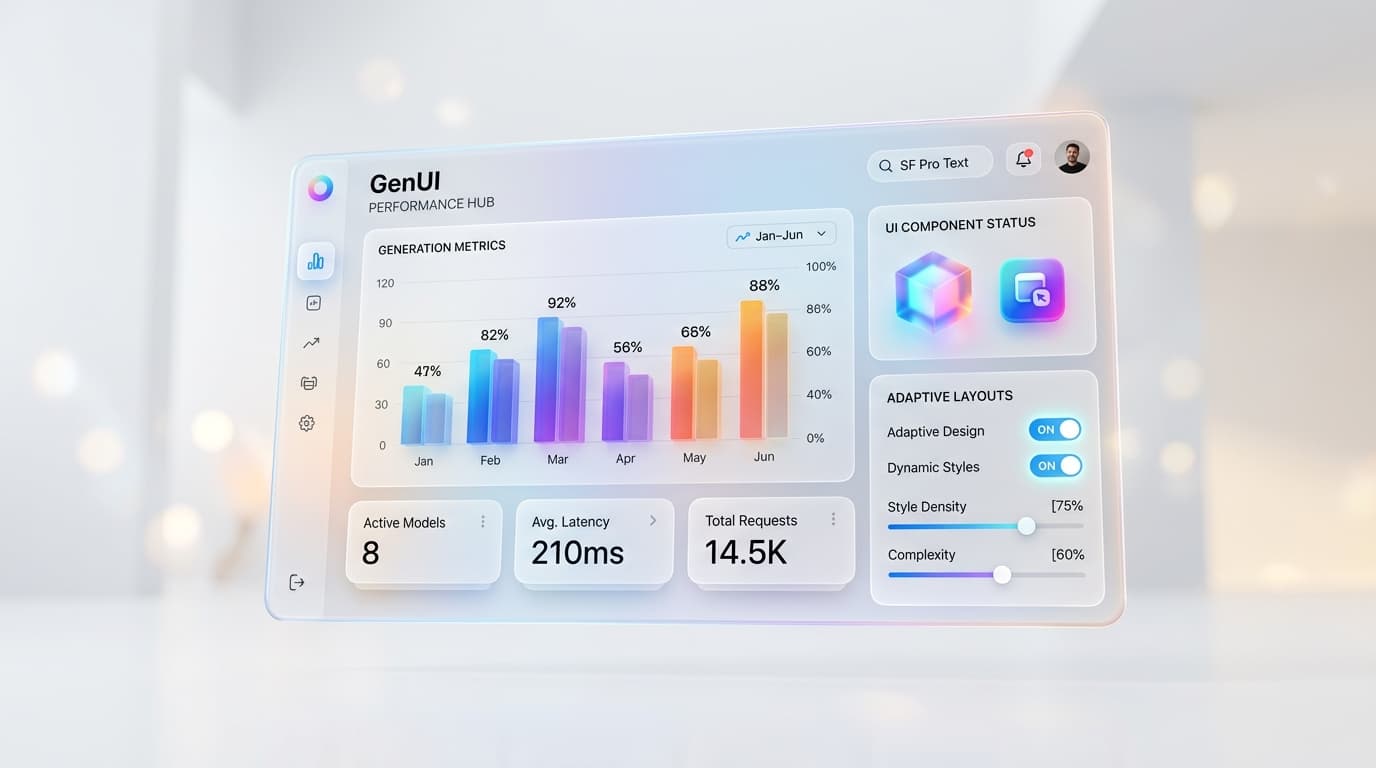
GenUI flips this. In a GenUI architecture, the system doesn't just fetch data; it interprets the user's intent and context to determine the most effective way to present that information. If a user asks, "Show me my top-performing products this month compared to last year," the AI might generate a multi-series bar chart, a summary table, and a set of actionable insights—all constructed on the fly.
The Toolkit of the GenUI Era
Two major players are defining the current GenUI landscape:
- Vercel v0: This tool has shifted the "design-to-code" pipeline. By using natural language prompts, developers can generate high-quality React components using Tailwind CSS and Lucide icons. While v0 is currently a development-time tool, it signals the future of runtime generation.
- Vercel AI SDK: The real magic happens at runtime. The AI SDK (specifically features like
streamUIor theuseChathook) allows developers to stream actual React components directly into the chat interface. Instead of just getting a text response from an LLM, the application receives a functional, interactive UI component that matches the current conversation context.
Intent-Driven Interfaces
The hallmark of GenUI is the intent-driven interface. In this model:
- Context is King: The UI adapts based on where the user is, what they’ve done previously, and what they are trying to achieve.
- Reduced Cognitive Load: Users no longer have to navigate complex menus. They express their goal, and the interface "assembles" itself to provide the most direct path to that goal.
- Just-in-Time Rendering: Components are only generated and rendered when they are needed, optimizing the experience for specific, high-intent moments.
Challenges and the Path Forward
GenUI isn't without its hurdles. Developers must grapple with:
- Deterministic vs. Probabilistic UI: Ensuring the AI-generated UI is reliable and doesn't "hallucinate" broken layouts.
- Performance: The latency of LLM generation vs. the speed of traditional rendering.
- Brand Consistency: Maintaining a unified design language when components are created at runtime.
Despite these challenges, the shift is inevitable. GenUI represents the final step in making software truly personal—an interface that doesn't just serve the user, but understands them.